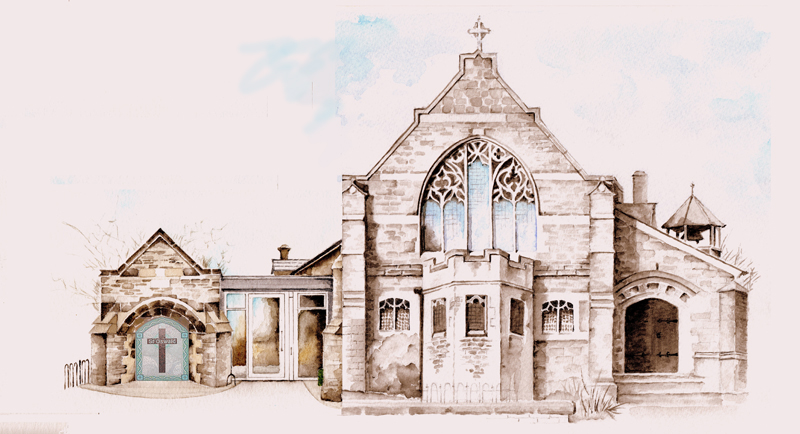
St Oswald's
The parish church of Bollington
Bollington Road, Bollington Cross, SK10 5EG
07895 363 038

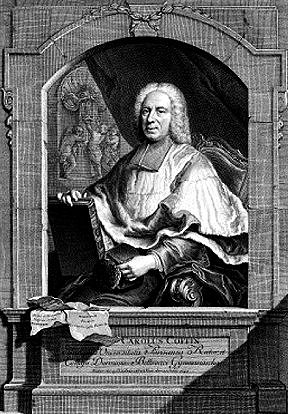
Charles Coffin
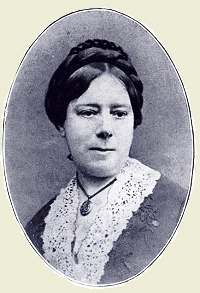
Catherine Winkworth
Charles Coffin was Rector of the University of Paris from 1718. The 1736 publication Paris Breviary and Hymni Sacri Auctore Carolo Coffin was a collection of 100 of his hymns and poems.
Many of his hymns were translated by Chandler. His other hymns include Happy are they, they that love God.
- - -
Revd John Chandler was born at Witley, near Godalming in Surrey, where his father was the Vicar. After ordination in 1831 (deacon), 1832 (priest), he became the next Vicar of Witley in 1839. He translated a number of hymns including Christ is our cornerstone and Oh Christ, our hope, our hearts desire .
- - -
Chandler translated at least ten hymns written by Coffin, including On Jordan’s banks the Baptist’s cry, O Holy Spirit, Lord of Grace, and As now the sun's declining rays, although most of the others would be unfamiliar today.
- - -
Catherine Winkworth was born in London, but her father was from Alderley Edge. She translated many hymns from German to English including Deck thyself, my soul, with gladness, Now thank we all Our God and Praise to the Lord, the Almighty, the King of creation. She was a pioneer in promoting women’s rights and put much of her energy into the encouragement of higher education for women.
- - -
Revd Richard Frederick Littledale (1833-1890). He was born in Dublin and ordained deacon by the Bishop of Norwich in 1856, but then moved to London, where he was ordained priest in 1857. From 1857 to 1861 he was curate of St Mary the Virgin, Crown Street, Soho. He remained in London for the rest of his life, but suffered from chronic ill-health, took little part in any parochial duties, and devoted himself mainly to writing. His entry in the 1885 edition of Crockford’s Clerical Directory lists 32 books by him (including Catholic Ritual in the Church of England, which ran to 13 editions).
He translated a number of hymns including Come down, O Love divine and O Fire of God, the Comforter by Hildegard of Bingen. He also translated a Latin version of Psalm 130 Christ, enthroned in highest heaven, hear us crying from the deep
and wrote the hymn O Lord to whom the spirits live of all the faithful passed away, a couple of funeral hymns probably used more in Victorian times than nowadays.
- - -
For each hymn we have provided a set of verses together with an electronically generated sound-track. The sound track does not provide any words - just the tune.
The selection of hymns to be included was subject to certain limitations, notably the restrictions of copyright. This meant that many modern hymns were excluded, and the exclusion even applied to some updated versions of traditional hymns. Some publishers have made a few minor changes to make hymns more "inclusive" and have then claimed copyright over the revised text. So in most cases the ORIGINAL texts have been used, even though these may not be the versions that appear in modern hymnals.
In deciding what tunes to be used, this has largely been the Webmaster's personal choice. It is a mixture of familiar tunes and tunes that are not well-known, but deserve to be better known. The webmaster has included some personal favourites (and excluded some pet hates!). The soundtracks provided go with the words provided - if there are four verses, the tune is repeated four times. Where possible tunes have been provided with descants or alternative arrangements.
Wherever possible, there is an explanation of who wrote the words or tunes, the circumstances under which they were written, when (and sometimes why). Many hymns include references to verses appearing in the King James Version of the Bible; more modern translations were not then available! In some cases we have tried to explain these scriptural references or other instances where words have changed their meaning over time.
This selection of "Sing-along Songs of Praise" was originally a series of blog posts written during the COVID Lockdowns of 2020. It was intended to allow people to sing hymns in the safety and privacy of their own homes at a time when hymn-singing in church was not allowed (even if the church building was open!).
When hymns are sung as part of a church service, it is normally the case that the hymn books are set aside at the end of the hymn and the next part of the service continues. There is no time to sit and reflect on the meaning or the beauty of words and/or music. This collection allows you to take your time, to read, listen sing along, reflect, and to repeat a hymn again if you wish.
The Parish Church, its building, activities and clergy are entirely funded by voluntary contributions.
We do NOT receive any financial support from the Government, the Diocese, or the Church Commissioners.
Please visit our Donations page to see how you could help to keep us operating both as a centre of worship and as a resource for the local community
Sign up to be a
Support us every time you shop on line through
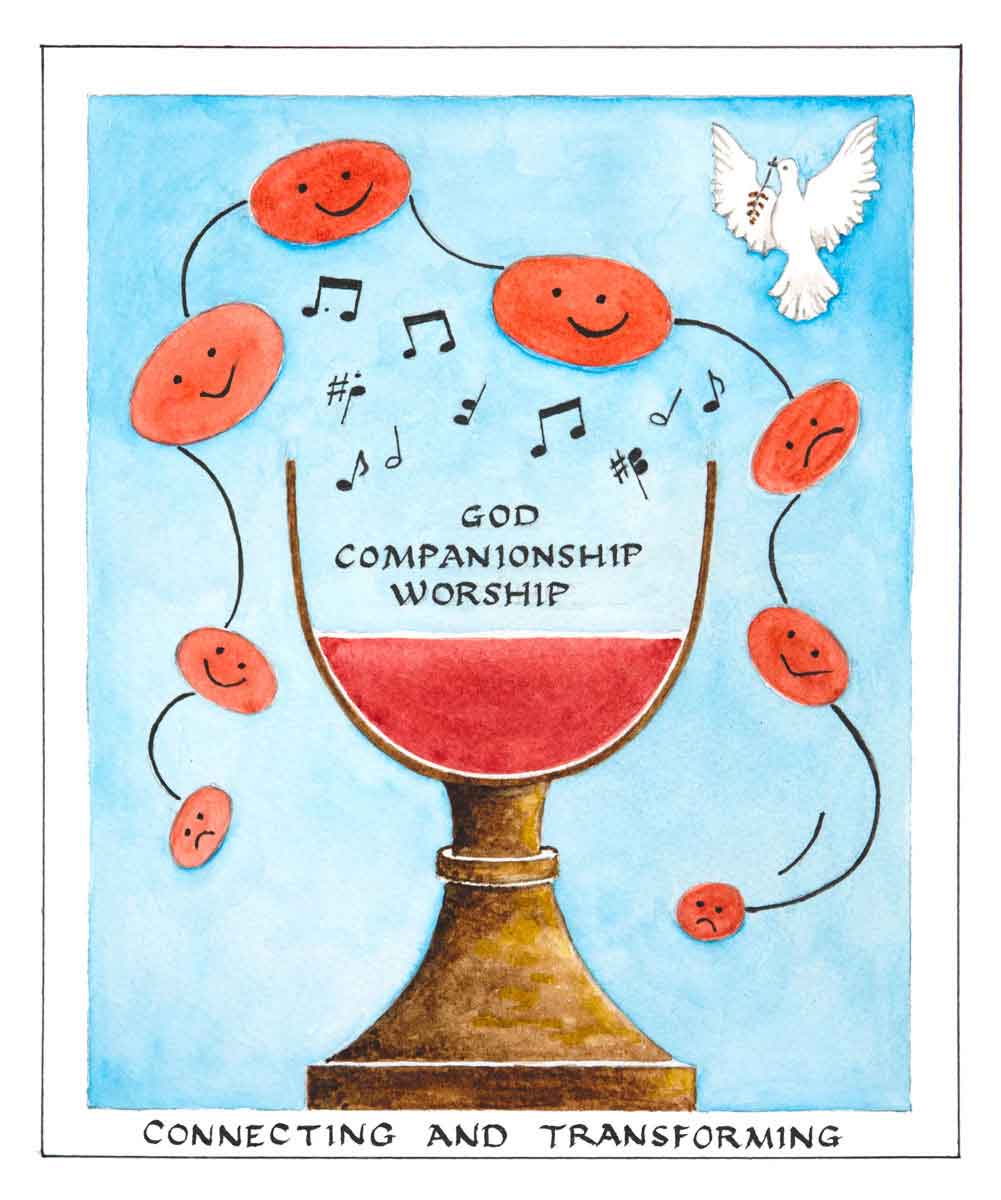
The picture of the chalice is symbolic of:
"A joyful image of a Eucharistic community which knows how to celebrate God's goodness to us but also how to reach out to the community and connect with those in need, in pain, in difficulty, who feel lost or neglected, or that they don't belong."
Come and join us! Explore this website to find out about our activities. We look forward to seeing you soon at one of our services or events!